Women rights in Portugal before and after the Carnation Revolution
The 1974 Revolution opened the door to real freedom - women in Portugal could finally work, divorce and live life on their own terms.
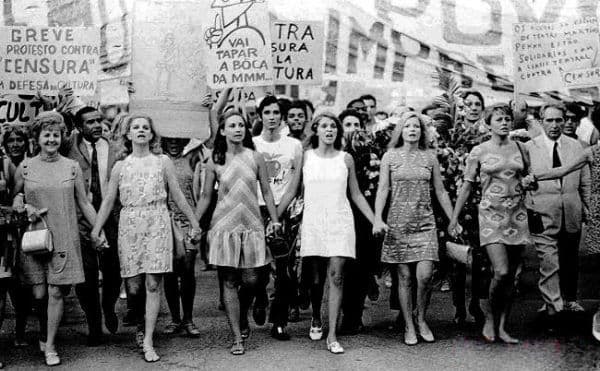
If you’ve heard about the dictatorship of Salazar in Portugal, you probably assumed people’s rights were severely restricted. But what did that actually mean for women?
While feminism was gaining ground across much of Europe, women in Portugal were being pushed in the opposite direction. The 1933 Constitution proclaimed equality before the law and yet it made exceptions for women. Article number 5 stated that citizens were equal, “except for the woman, the differences resulting from her nature and the good of the family”.
Under the so-called Estado Novo (“New State”), women were allowed only to have traditional roles: mothers, housewives, and were expected to stay at home, take care of children, and keep their mouths shut. Equality existed in theory. In practice, women were expected to obey.
The limitations of women's rights during the dictatorship:
- Married women were not allowed to travel abroad or have a passport without their husband’s written permission.
- Husbands had the legal right to open and read their wives' personal correspondence.
- A husband could legally prohibit his wife from working outside the home. He could even visit her workplace to demand she quit, and employers were often legally obliged to fire her.
- Women were excluded from several prestigious career paths, including the judiciary, diplomacy, and certain administrative roles.
- Husbands managed all couple-owned property, and even the wife's personal earnings were under his control until legal changes in the mid-1960s.
- Abortion was strictly illegal with a prison sentence of up to 8 years.
- Contraception was only permitted for medical reasons and required a husband’s consent.
- Nurses couldn't marry or had to leave their jobs upon marrying.
- Women were paid significantly less than men, often half the salary for the same work.
- While women technically had the right to vote from 1933, it was not on equal terms with men. Women needed secondary education to vote, while men only needed to be able to read and write.
- Due to lack of access to education, 36.7% of women were illiterate in 1960.
What changes did the Revolution bring to women?
Jobs that were once closed to women slowly opened up. Maternity and paternity leave became a right. Husbands no longer had the legal power to control things like their wives’ mail. And voting rights were fully recognized.
One of the biggest changes came much later. During the dictatorship, around 100,000 illegal abortions were happening every year, and many women died because of it. In 2007, after a national vote where 59% supported the change, abortion was finally legalized. Before that, women could go to prison for up to three years, unless the pregnancy was the result of rape or seriously threatened their health.
Today, abortion is allowed up to 10 weeks of pregnancy, with some exceptions in specific cases. In 2015, the law became a bit stricter, adding a mandatory three-day “reflection period” and recommending psychological counseling beforehand.
However, there is still a lot of work to be done to achieve gender equality in Portugal. Portugal ranks 10th in the EU on the Gender Equality Index with 63.4 out of 100 points. The index found that women continued to earn less than men in 2025.
Domestic violence is the second-most registered crime in Portugal, at least 24 women killed in Portugal in 2025. To many, the domestic violence we still see today in Portugal stems from the Estado Novo, from a mentality present in the Estado Novo where the man is the head of the household and held the authority at home.